Yokai Encyclopedia
Explore Japan's rich tradition of supernatural creatures — from mischievous spirits to terrifying demons. Each yokai carries centuries of folklore from different regions across Japan.

Aka-name
垢嘗
Aka-name haunts neglected, filthy bathrooms and bathhouses, licking up the accumulated grime from walls and tubs. It causes no injury to humans but serves as a compelling folk explanation for why dirty bathrooms feel distinctly unwelcoming — someone, or something, is in there. The creature's existence functioned as practical encouragement to keep bathing areas clean.

Amanojaku
天邪鬼
Amanojaku is the spirit of pure contradiction — a small demon that does the opposite of everything, twists words into their reverse meaning, and delights in misunderstanding. Familiar in folk narrative as a scheming impersonator and in Buddhist art as the demon trampled beneath guardian deities, amanojaku gave its name to a Japanese adjective still in daily use for anyone who refuses to go along with what is expected.

Azuki-arai
小豆洗い
Azuki-arai is among the most peculiar of Japan's supernatural beings: a creature heard but almost never seen, washing red azuki beans at the edge of a stream and murmuring a rhythmic song. It causes little direct harm, yet the sound alone — scraping through the dark near a river — was enough to keep travelers away from the water's edge at night.
Bakeneko
化け猫
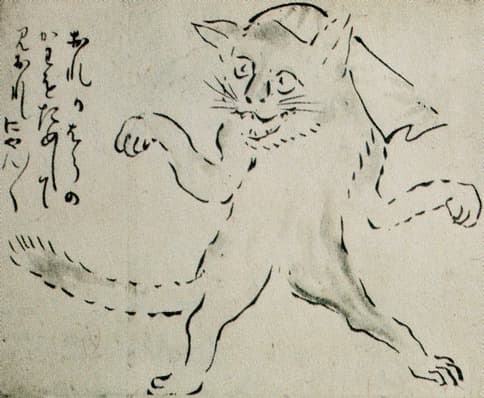
The bakeneko is an old cat that has crossed over — not into death, but into something stranger: a creature with human cunning, supernatural power, and its own agenda. It dances with a cloth on its head, speaks in human voices, impersonates the dead, and inhabits the gap between the domestic and the terrifying. In a culture that has always had a complicated relationship with cats, the bakeneko concentrates centuries of feline ambivalence into a single figure.
Byakko
白虎
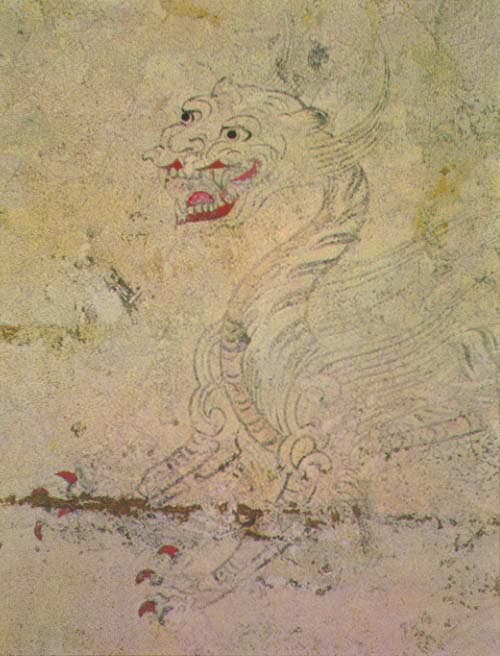
Byakko — the White Tiger — is one of the Shijin, the four divine beasts that guard the cardinal directions in East Asian cosmological tradition. Assigned to the west and to the season of autumn, it appears as a magnificent white tiger, its form embodying the qualities of strength, fierce protection, and the power to ward off malevolent forces. Introduced to Japan from China via the study of yin-yang cosmology and astronomy, Byakko became a fixture of imperial city planning and ritual geography.
Gashadokuro
がしゃどくろ
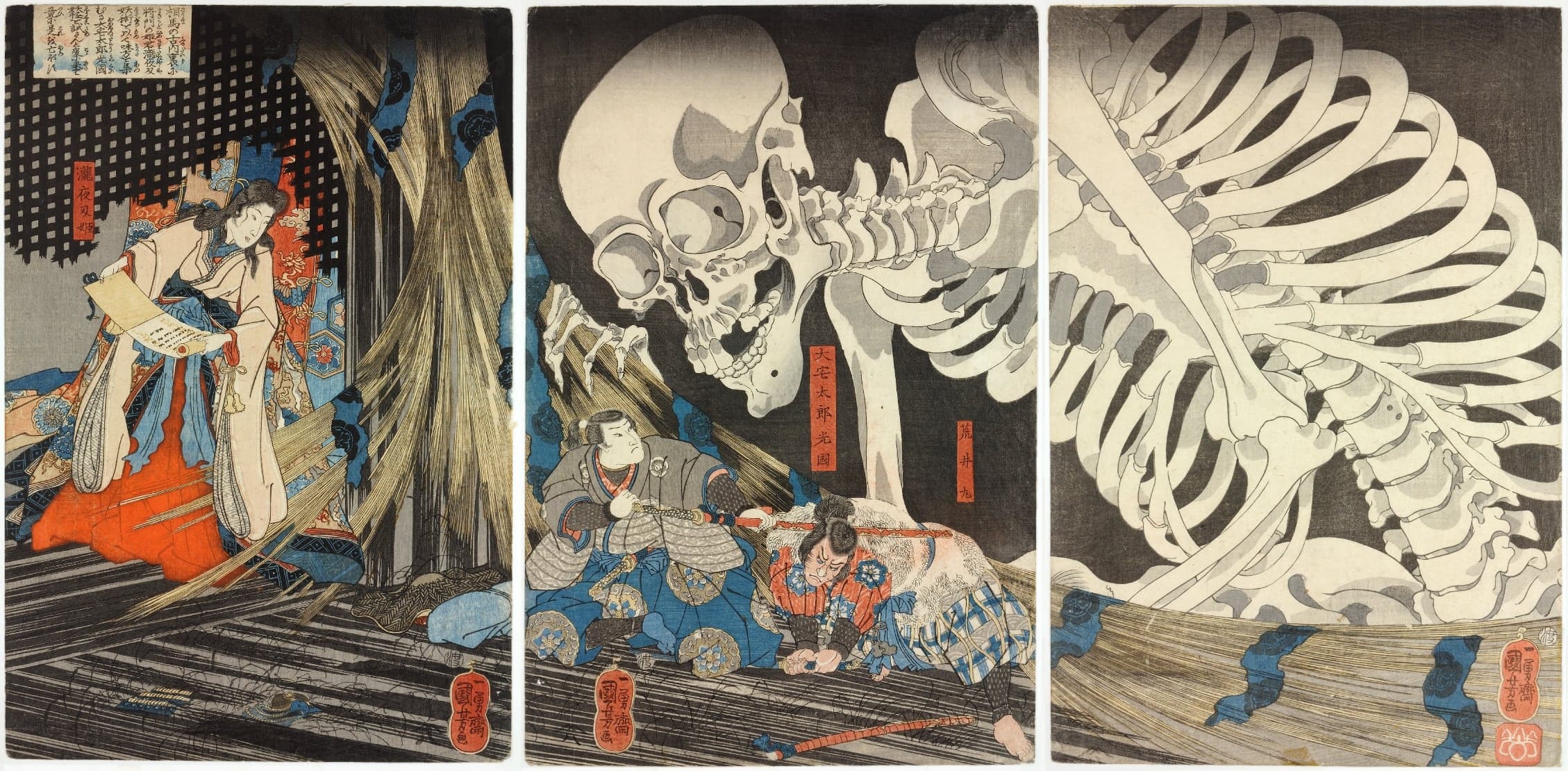
The gashadokuro is a skeleton the size of a building, assembled from the bones and unresolved rage of soldiers and famine victims who died without proper burial. It roams after midnight, its approach heralded by a ringing in the ears. It picks up humans and bites off their heads. It cannot be destroyed — only avoided until it exhausts its accumulated hatred and dissipates.
Genbu
玄武
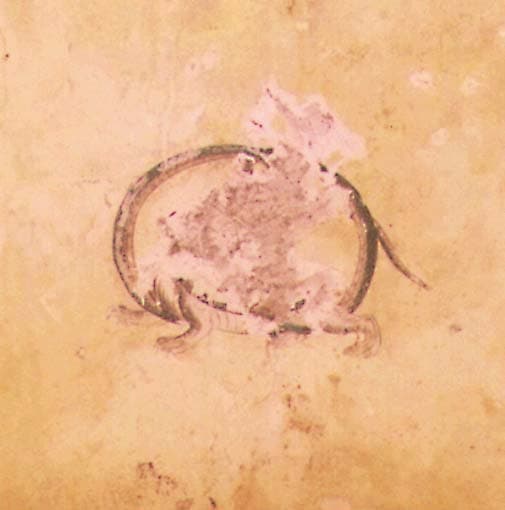
Genbu — the Black Tortoise — is the guardian of the north and the embodiment of winter among the four divine beasts of East Asian cosmology. Its form is unique among the Shijin: not a single animal but an intertwining of two — a tortoise and a serpent, coiled together. This composite image evokes both the enduring patience of the tortoise and the transformative, regenerative power of the serpent, making Genbu perhaps the most symbolically layered of the four guardians.
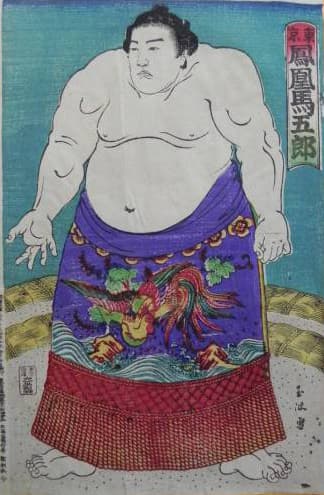
Hōō
鳳凰
The hōō — Japan's phoenix — is among the most auspicious creatures in East Asian sacred tradition. Arriving in Japan via China and Buddhist exchange, it became a symbol of righteous rulership and cosmic harmony. Neither monster nor kami in the native Shinto sense, the hōō occupies a distinctive space: a heavenly bird whose very appearance signals that the world is in proper order. It is immortal not by rising from flames but by nature, living thousands of years before peacefully returning to earth.

Hyakume
百目鬼
Hyakume — literally 'hundred eyes' — is a yokai defined by its most unsettling feature: a body covered in countless eyes, each one watchful and unblinking. As depicted in the yokai catalogues of the Edo period, particularly in the work of Toriyama Sekien, this creature appears as a woman whose arms are studded with small round eyes — a disturbing transformation said to be the consequence of obsessive petty theft. The eyes, unable to close, make concealment impossible and give the yokai its distinctive character as a figure of exposed guilt.
Iso-onna
磯女
Iso-onna is a female yokai said to haunt the rocky coastlines of western Kyushu, particularly in Nagasaki, Kumamoto, and Saga prefectures. She appears as a beautiful woman with long, flowing black hair, lurking near the shoreline or drifting on the water's surface. Her precise nature and methods of attack vary considerably between localities, though most accounts agree on her lethal intent toward fishermen and sailors.
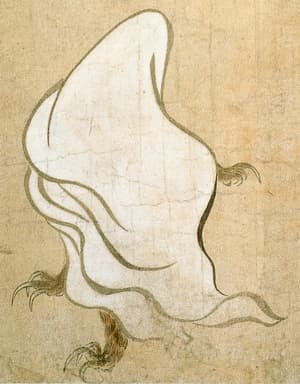
Ittan-momen
一反木綿
The ittan-momen is a strip of white cotton cloth — one tan in length, roughly ten meters — that flies through the night sky and wraps itself around humans, suffocating them. It originates in a specific peninsula in southern Kagoshima Prefecture, making it one of Japan's more precisely localized yokai. Most people outside that region know it only from its comically friendly appearance in Shigeru Mizuki's GeGeGe no Kitarō — a portrayal almost the opposite of the original tradition.

Jorōgumo
絡新婦
Jorōgumo is a spider that has lived for four hundred years, gaining the power to transform into a beautiful woman and prey upon men. Luring victims with music or seduction, she binds them in silk and devours them. Her legends cluster around deep pools and old waterfalls, where the boundary between the surface world and what lies beneath seems thinnest.

Kamaitachi
鎌鼬
Kamaitachi are weasel-like creatures associated with whirlwinds, particularly in Niigata and Nagano Prefectures. Three work in sequence: the first knocks down a victim, the second slices with a sickle-like claw leaving a clean cut, and the third applies a healing salve. The resulting wound is strangely bloodless and painless, as though the attack itself were half-erased.
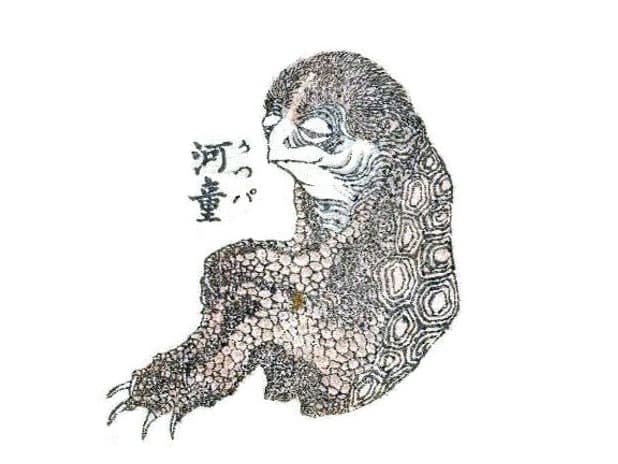
Kappa
河童
The kappa is one of Japan's most recognized water spirits — a creature of rivers, ponds, and irrigation canals said to drag people and horses into the depths. Turtle-shelled, beak-mouthed, and perpetually courteous despite its dangerous nature, the kappa occupies a peculiar place in Japanese folklore: feared, bargained with, and occasionally befriended.

Kawauso
川獺
Kawauso are otters that have lived long enough to develop supernatural shapeshifting powers. Typically harmless but mischievous, they transform into beautiful women, wandering monks, or other travelers to startle passersby or steal fish and sake from riverbank settlements. They are considered peers of the fox and tanuki in the art of illusion.
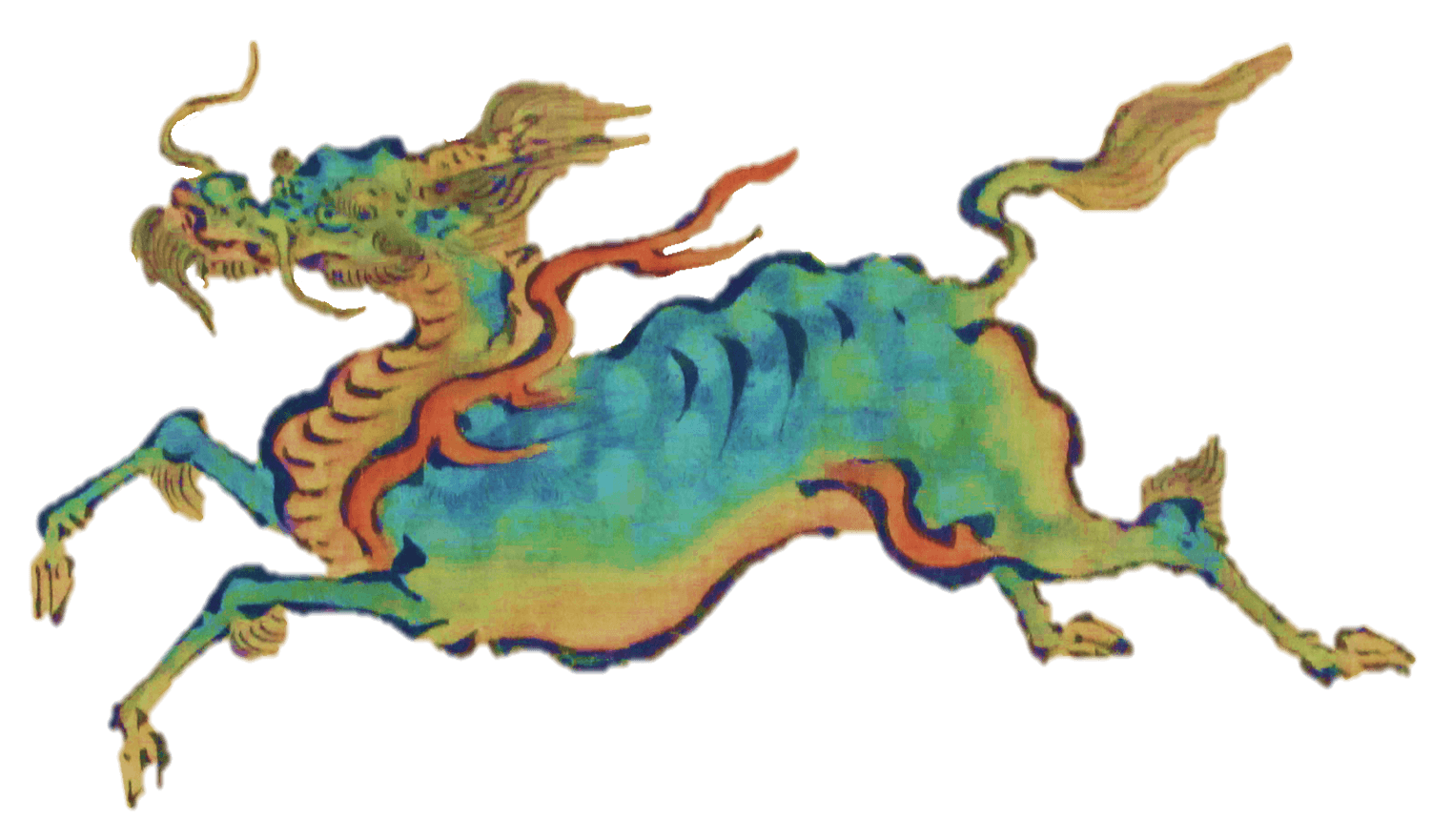
Kirin
麒麟
The kirin is among the most benevolent of all creatures in East Asian sacred tradition — an omen not of destruction but of wisdom and righteous governance. Composite in form, with the body of a deer, scales of a dragon, hooves of an ox, and a tail resembling a bull's, it moves with such gentleness that it does not break a single blade of grass beneath its feet and will not harm any living creature. In Japan, it arrived alongside Buddhism and Confucianism and was absorbed into court aesthetics, shrine decoration, and the symbolism of noble family crests.

Kitsune
狐
Kitsune — the fox — occupies the highest position in Japan's animal supernatural hierarchy. Sacred messenger of the rice deity Inari and shape-shifting deceiver of humans, the fox accumulated tails as it aged, each new tail marking an increase in power. No other animal in Japanese belief commanded such a combination of genuine religious reverence and genuine popular fear.

Kitsunebi
狐火
Kitsunebi, literally 'fox fire,' refers to eerie floating flames said to be produced by foxes from their mouths or tails. Appearing in chains across dark fields and marshes, these flickering lights were believed to lure travelers astray. Widely depicted in Edo-period literature and woodblock prints, kitsunebi became one of the most iconic symbols of fox supernatural power in Japanese folklore.
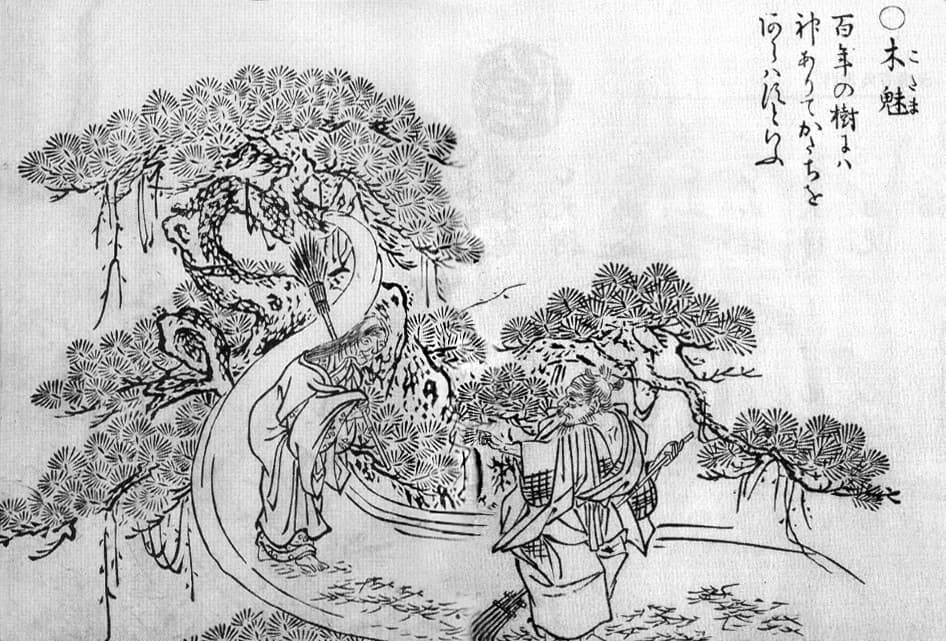
Kodama
木霊
Kodama are spirits dwelling within ancient trees, particularly those of great age and size. Felling a tree that houses a Kodama was considered a serious transgression that would bring misfortune upon the woodcutter and their household. They are among the oldest nature-spirit traditions in Japan, appearing in texts predating the formal yokai catalogs.
Konaki-jijii
子泣き爺
Konaki-jijii originates from the mountains of Tokushima Prefecture in Shikoku. It imitates the cry of an abandoned infant to lure travelers, then clings to whoever picks it up, growing impossibly heavy — heavy as stone — until the carrier collapses under the weight. It appears as an infant with the face of a wizened old man.

Mikoshi-nyūdō
見越し入道
Mikoshi-nyūdō is a giant monk-like apparition that grows taller the longer you look up at it. Sightings typically occur on night roads and bridges. The standard countermeasure — shouting 'I see through you!' (mikoshita) — is said to dispel the creature, though some accounts warn that looking up is itself the fatal error.
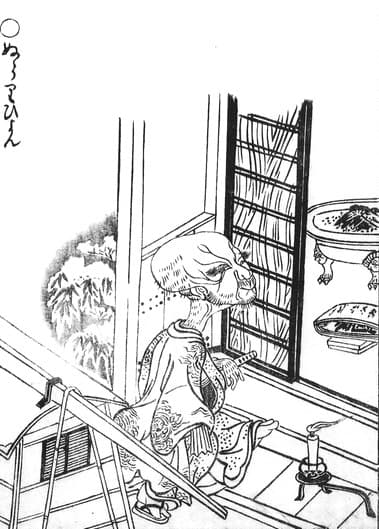
Nurarihyon
ぬらりひょん
The nurarihyon is perhaps the most peculiar figure in the Japanese yokai tradition — not because it is dangerous, but because it is absolutely at home in your house without your permission. It walks in while you are busy, sits down, drinks your tea, and behaves with the complete ease of a man who has lived there for decades. Nobody knows quite what it is. That ambiguity is the point.

Nuri-kabe
塗壁
Nuri-kabe is an invisible — or white wall-like — entity that blocks travelers on nighttime roads. Rooted in folklore from the Onga district of Fukuoka Prefecture, it manifests as an impassable barrier that cannot be walked around. Local tradition holds that striking the base of the wall with a stick causes it to disperse.
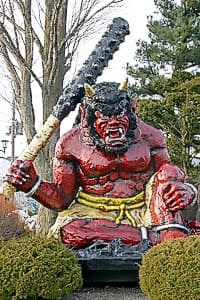
Oni
鬼
The oni is Japan's great demon — horned, club-wielding, and magnificently terrifying. It staffs the courts of Buddhist hell, roams mountain passes as a flesh-eating ogre, and gets pelted with soybeans every February in the setsubun ritual. Few figures in Japanese mythology have remained so central for so long, and so resistant to simple interpretation.

Onibi
鬼火
Onibi are ghostly flames that drift over graveyards, swamps, and mountain paths after dark. Described as pale blue or white lights that hover just above the ground, they are said to be the condensed resentment of the dead or the spiritual energy of decaying matter. Those who chase them risk becoming hopelessly lost in the wilderness.
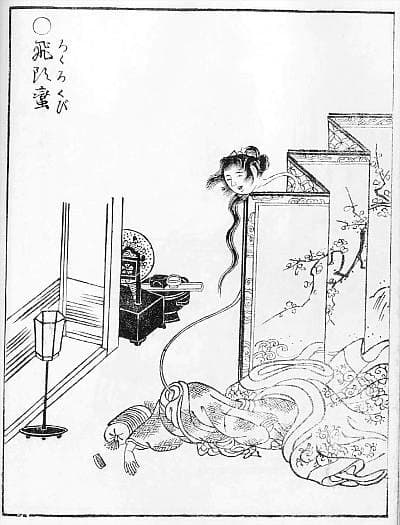
Rokurokubi
ろくろ首
By day, the rokurokubi appears entirely human. By night, her neck extends to impossible lengths — stretching across rooms, reaching out windows, telescoping through darkness toward whatever has caught her curiosity or appetite. She is among the most recognizable figures in Edo-period yokai illustration, and among the most psychologically unsettling.

Ryū
龍
The ryū is not simply a monster but a sacred being woven into the deepest layers of Japanese mythology and religious practice. Long and serpentine, wingless, adorned with scales, horns, and claws, the Japanese dragon is above all a water deity — governing rainfall, rivers, and the sea. Unlike the treasure-hoarding dragons of European legend, the ryū is fundamentally a kami, a divine presence that must be honored and appeased rather than slain.
Sunakake-babaa
砂かけ婆
Sunakake-babaa is a hag yokai from the Kinki region, particularly associated with Nara Prefecture. Invisible or concealed in trees and shadows, she pelts travelers and farmworkers with sand or gravel without warning. No motive is attributed to the attacks beyond malice; no injury beyond the startling impact is typically reported.
Suzaku
朱雀
Suzaku — the Vermilion Bird — guards the south and summer among the four divine beasts of East Asian cosmology. Depicted as a great crimson bird in flight, it is sometimes confused with the hōō (phoenix), but the two are distinct in tradition: the hōō is a divine omen appearing in times of righteous rule, while Suzaku is a cosmological guardian assigned to a specific direction. In Japan, Suzaku's name lives on in the great southern avenue of ancient Kyoto.

Tanuki
狸
Tanuki — the raccoon dog — holds a unique position in Japanese folklore as a creature simultaneously foolish and magical, earthy and uncanny. Capable of shape-shifting by placing a leaf on its head, it delights in tricking humans while remaining fundamentally less malevolent than the fox. The tanuki's enormous popularity as a symbol of good fortune has given it a second life in ceramics and garden statuary that extends far beyond its supernatural origins.
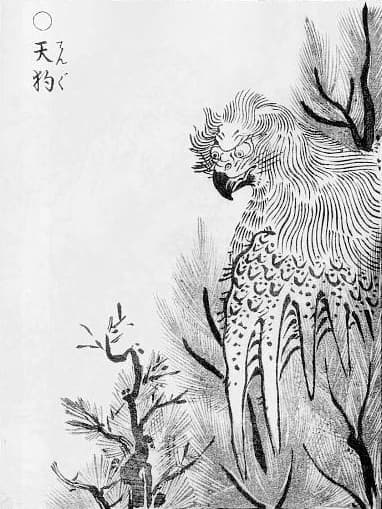
Tengu
天狗
The tengu is Japan's great mountain spirit — part divine protector, part dangerous trickster, and one of the few yokai actually enshrined and worshipped at dedicated sanctuaries. Recognized by their impossible red noses or crow-black beaks, tengu are the teachers of swordsmen, the tormentors of the arrogant, and the guardians of Japan's sacred mountain ranges.

Tōfu-kozō
豆腐小僧
Tōfu-kozō — 'tofu boy' — is a small child in a wide hat who carries a block of tofu on a tray, wandering the streets of Edo without apparent purpose or menace. He appeared in the illustrated popular fiction of the eighteenth century not as a terror but as a curiosity, perhaps the most domesticated and least frightening entry in the entire yōkai catalog.

Tsuchigumo
土蜘蛛
Tsuchigumo — literally 'earth spider' — began in Japanese historical records not as a monster but as a term for ancient clans who resisted the Yamato court's authority. Over centuries, these historical figures were transformed in the popular imagination into a giant spider yokai capable of ensnaring victims in supernatural webs. The creature's most famous story involves the warrior Minamoto no Yorimitsu, whose encounter with the tsuchigumo became a cornerstone of classical Japanese theater.

Tsurubeotoshi
釣瓶落とし
Tsurubeotoshi is a yokai known principally from the Kinki (近畿) region of Japan — Kyoto, Shiga, Wakayama, and neighboring prefectures — that falls suddenly from the tops of large trees onto unsuspecting travelers. Its name means 'well-bucket drop,' comparing its abrupt descent to the fall of a wooden bucket into a well. What makes this creature particularly unsettling is the inconsistency of its appearance across accounts: sometimes it is a severed head, sometimes a ball of fire, sometimes a formless crushing weight. It is above all defined not by what it looks like but by what it does.

Umibōzu
海坊主
Umibōzu is a massive, dark entity said to rise from the ocean on calm, moonless nights, threatening ships and their crews. Its name — combining 'sea' and 'Buddhist monk' — refers to its enormous, smooth, hairless head breaking the surface. Among Japan's maritime communities, few supernatural threats commanded more fear: an encounter with umibōzu was understood as a death sentence for those at sea.

Ushi-oni
牛鬼
Ushi-oni — 'ox-demon' — is one of the most fearsome creatures in western Japan's supernatural landscape. Part bull, part demon, sometimes described with a spider's body and crab-claw appendages, it haunts coastlines and river mouths from the Seto Inland Sea to the Pacific shore of Shikoku. Unlike many yōkai whose danger is ambiguous, ushi-oni kills directly and without ceremony.

Yamabiko
山彦
Yamabiko is the spirit held responsible for mountain echoes. When a traveler's shout returns from a distant slope, it was understood not as a physical reflection of sound but as a response from an entity dwelling in the mountains. Toriyama Sekien depicted it as a small dog-like creature, giving the otherwise invisible phenomenon a bodily form.

Yamanba
山姥
Yamanba is an old woman who haunts remote mountain passes, capable of devouring travelers who stray too deep into the forest. Yet she is far more than a simple monster: in certain traditions she is revered as a mountain deity who bestows blessings on hunters and woodcutters, and in folk narrative she appears as the fierce, devoted mother of the hero Kintoki. Few figures in Japanese folklore contain such concentrated ambivalence.
Yuki-onna
雪女
The yuki-onna — snow woman — appears on mountain passes and winter roads as a figure of unearthly beauty: pale as the snow itself, dressed in white, her black hair unbound against the storm. She kills travelers. She also, in some tellings, falls in love with them. Few yokai capture the Japanese sense of the beautiful-dangerous as precisely as she does.
Zashiki-warashi
座敷童
The zashiki-warashi is a child-spirit believed to haunt the interior rooms — particularly the formal reception rooms — of old farmhouses in the Tōhoku region of northeastern Japan. Its presence means prosperity. Its departure means ruin. For generations of families in Iwate Prefecture, these invisible children were treated as honored household members.